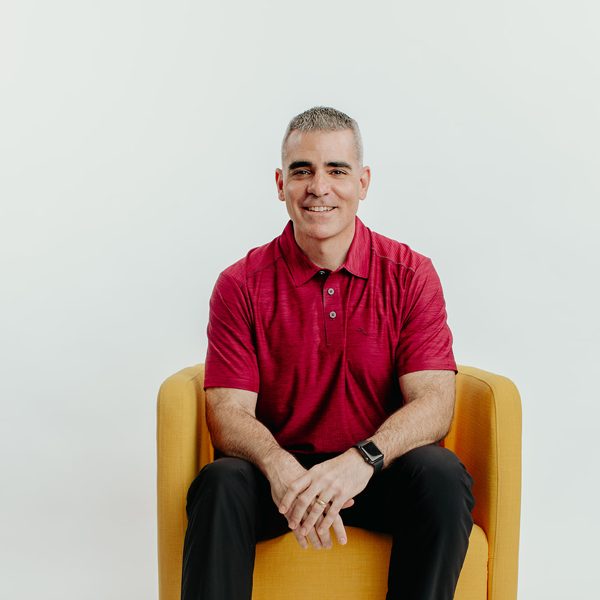
Brian’s story
How I discovered the best job in the world.
When I founded Mirror in 2006, I didn’t know anything about recruiting. Not a lick. I had learned exactly one thing in four years of growing a software agency: my developer colleagues really hated recruiters. That made an impression, because developers are just about the nicest people I know.

Part one: tales too wrong not to be true.

“What could recruiters be doing so badly to make my good-natured friends despise them?”
Turns out, a lot. We talked it out over a long lunch, something we call Awesome Lunch Fridays, where the dev staff gets together for rotating takeout and conversation. The discussions are enlightening, even if the food isn’t as awesome anymore. More greens, fewer carbs. Sigh.
I listened to the horror stories. Jobs and companies that didn’t exist. Recruiters who wouldn’t share the name of the company they were recruiting for. The anonymous, well-funded tech startup whose job description sounded like tech keywords in a popcorn machine.
The lunch kept going and, somehow, the stories got worse. Résumés submitted to dozens of companies without consent. Last-minute salary and title changes after many hours of invested time. Candidates submitted to my own agency who mysteriously disappeared the moment we showed interest in interviewing them. Fake developers as bait. Who would have thought? Not me.
Part two: the revelation.
I have to admit, while I listened I was chuckling at each story. In the background, though, I was thinking seriously.
“I can do way better.”
Doing anything better usually means discovering how to do it differently. Here the solution seemed obvious: radical transparency with developers and companies, and a pursuit of long-term relationships at the expense of short-term transactions. Fortunately those happened to be my natural inclinations anyhow. I decided to give it a shot. What did I have to lose?
Part three: first steps (and stumbles).
Well, I did get heckled. Really. Candidly, I probably deserved it. What did I select as the first slogan for an experimental recruiting venture built on radical honesty and optimism?
“We hate recruiters, too.”
In my defense, it was true, and it resonated with developers who had lived the stories above. Other recruiters didn’t appreciate it, and they let me know, loudly, during a charity event. For cancer research. Somehow that proved both their point and mine. I dropped the slogan and carried on with the mission, joyfully, to this day.
Part four: the mission takes shape.

Real, transparent jobs.
The opportunities I share are real, at companies that are actively hiring and have asked me to help them add engineers who are the right technical and cultural fit. I share the company’s name openly and immediately. Developers tell me this transparency is rare; recruiters tell me it’s crazy. “Couldn’t the developers just apply directly?” I suppose they could. In twenty years it has happened very rarely, because people recognize that our collaboration, and my relationship with the hiring manager, accelerates their career now and later.
Genuinely interested developers.
I only submit developers with their consent, and only to opportunities they’ve reviewed and asked me to pursue. I had naively assumed this was how everyone operated, until we engaged recruiters for our own agency and twenty résumés landed in my inbox the next morning. I’d sort them, pick my favorites, ask for an interview, and hear that the developer actually wasn’t interested in interviewing with us. Insanity, and common. So: nobody goes anywhere until they’ve thoughtfully considered the opportunity, with every relevant detail, and said yes.
Authentic advice and collaboration.
I’ll be honest even when it isn’t good news. Don’t I get paid for making placements? Wouldn’t it always be best to make the placement if at all possible? A bad match doesn’t do anyone any favors, including me. I’m building relationships that last, with companies and with engineers, and relationships are built on trust. After twenty years, I can usually tell when a match is right, and when the one both sides are considering is going to hurt in a year.
“I believe the right way and the best way are the same way, and we are all better for it.”
At the end of the day.
I think I have the best job in the world. I get to be myself, and to provide authentic help to people and organizations I cherish. Mirror has granted me the never-ending benefit of working daily with engineers and the leaders who hire them. They make me smarter, energized and hopeful.
I believe software development is the ultimate team sport, where the whole can be exponentially more than the parts, especially when people get to operate at their natural frequencies. I learned that lesson with my first love, baseball. From Little League to Brandeis, playing different positions taught me how people begin, contribute and pivot. Today you’ll find me playing or watching with my wife Jaime, a high-school coach, and our three children. Many evenings one of them overhears my end of a call with an engineer, and afterward I get to tell them a story about what the right job can do for a person, and how, no matter where you start, the top is within reach.

My partner at Mirror
Jonathan Soo Hoo.
What can I say about Jonathan? When a neuroscience major tells you he wants to explore his passion for helping startups grow, the answer is yes. Here in Boston we call him wicked smaht. More importantly, he’s equally kind and authentic, which is what brings out the best in the engineers and companies we work with.
Technology, geopolitics, personal finance, fantasy football, physics: Jonathan can go deep on all of them, and he’s always asking questions, always after the other person’s perspective, and he never makes me feel dumb when I ask him to explain something like I’m a fifth grader.
When you get a message from Jonathan, it’s meant just for you. He has learned who you are, researched you carefully, and knows there’s a reason to talk. I’ve worked with thousands of people over the years, and I get to collaborate every day with one of the very best.
Developer roots
Mirror came out of a software agency.
I founded Atlantis Technology in 2001, and we’ve been building software and dev teams ever since. Rails since version 0.9.5, in 2005. It’s why the conversation with me is different: I’ve spent twenty-five years inside engineering teams, not just recruiting for them.
Listen
I hosted The Ruby on Rails Podcast.
For years I hosted The Ruby on Rails Podcast, talking with the people building the framework and the companies on it, and I’ve been a guest on plenty of others. Engineers’ careers are a subject I never get tired of.
Talk to Brian
Tell me what you need. I’ll think of someone.
Skip the formal job description. The more honest you are about the seat, the stack and the room, the faster a warm intro shows up. If I can help, great. If not, I’ll point you in the right direction.
 I read these myself. Jonathan Soo Hoo, my partner at Mirror, does the first outreach on some searches; if you hear from him, that’s why.