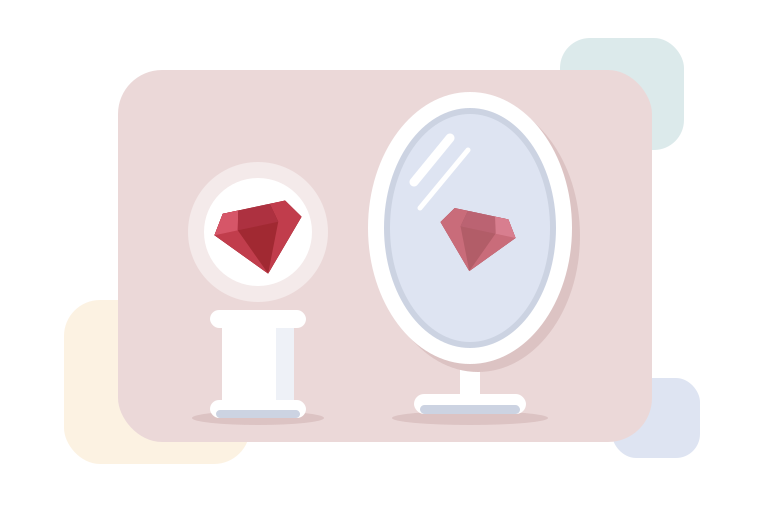
There are two answers to “Why Mirror?” One is about what a good match looks like. The other is a little joke hidden in the old spelling.
Where did Mirror start?
Over lunch, mostly. In 2006 I’d spent four years growing a software agency, and my engineer colleagues kept telling me recruiter horror stories, until I decided someone had to do this differently. That whole story is on the About page.
Around the same time, I helped a fellow engineer find a new seat, one where he could make a real difference. I knew him, I knew the company, and I knew they needed exactly what he was great at. Watching that match work showed me what this job could be when it’s done right.
So why “Mirror”?
Because that’s what a great fit looks like. When the match is right, what the company needs and what the engineer offers are mirror images of each other.
The company’s hard problem is the one the engineer has been itching to solve. The skills the team is missing are the ones the engineer brings. Even the hopes line up: where the engineer wants to grow is where the company is headed. Hold one up to the other, and they match.
When it isn’t a match, you can usually see that early, too. A seat that needs a builder won’t love a caretaker, however good. An engineer who wants to lead won’t be happy heads-down for long. Part of my job is noticing that before anyone signs anything.
That’s the whole job, really. Not finding a person for a seat. Finding the person the seat reflects.
What’s with the funny old spelling?
Longtime friends will remember it: mirRoR, with a capital R at each end of the “RoR” in the middle. RoR was what everyone called Ruby on Rails, and back then, it was all I recruited for. So I hid it in plain sight, right in the name.
If you never noticed, don’t worry. It was always more of an inside joke than a tagline. It also gave the name more capital letters than anyone could type right on the first try.
Does the name still fit?
Better than ever. The frameworks changed, and these days I place engineers who work across a lot more than one stack, so the spelling relaxed into plain Mirror. The idea didn’t change at all.
It also says something about how I work. A mirror shows both sides the same thing, and I try to do the same: honest with the company about the engineer, and honest with the engineer about the company. A match that only looks good from one side isn’t a match.
The short version
- Mirror started in 2006, out of a software agency and one good match.
- In a great fit, what the company needs and what the engineer offers are mirror images.
- The old spelling, mirRoR, hid “RoR” for Ruby on Rails, all I recruited for back then.
- The stacks changed. The idea didn’t.
When a match is right, both sides look at it and see themselves.



 I read these myself. Jonathan Soo Hoo, my partner at Mirror, does the first outreach on some searches; if you hear from him, that’s why.